
- Home
- About Us
- Products
- Centrifugal Oil Filter Machine for Industrial Oil Filtration
- Oil Purifier System Manufacturer for Industrial Oil Filtration
- Electrostatic Oil Cleaning Machines
- Low Vacuum Dehydration System
- Hydraulic Oil Filtration Machine for Industrial Applications
- Combo – Centrifuge Filter + Mechanical Filter
- Centrifugal Oil Filtration Skids
- Quenching Oil Filtration System
- Magnetic Filter – Metal Trap
- Thermic oil filtration system
- Gallery
- Importance
- Our Clients
- Blogs
- Contact

Magnetic Filte Metal Trap
● Ferrous Contamination Control
Magnetic Filter – Metal Trap
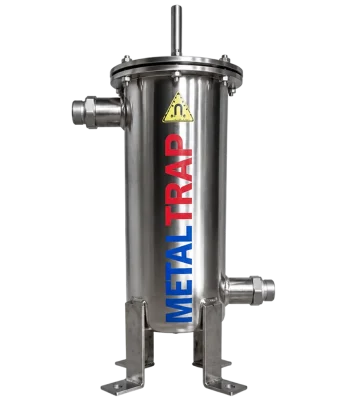
An inline magnetic separation system designed to capture ferrous metal contamination from industrial oils and process fluids. It continuously protects downstream equipment by retaining magnetic wear debris inside a robust stainless-steel housing.
✓ Captures iron, steel, rust and other magnetic particles
✓ Cleanable magnetic assembly without disposable filter media
✓ Inline construction for continuous fluid protection
⚫ Separation Process
Working Principle
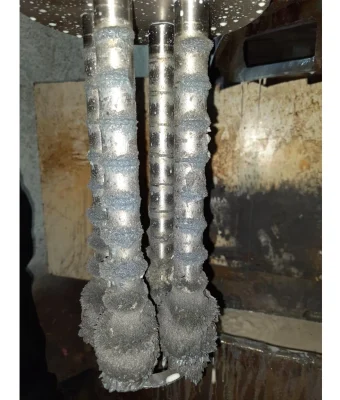
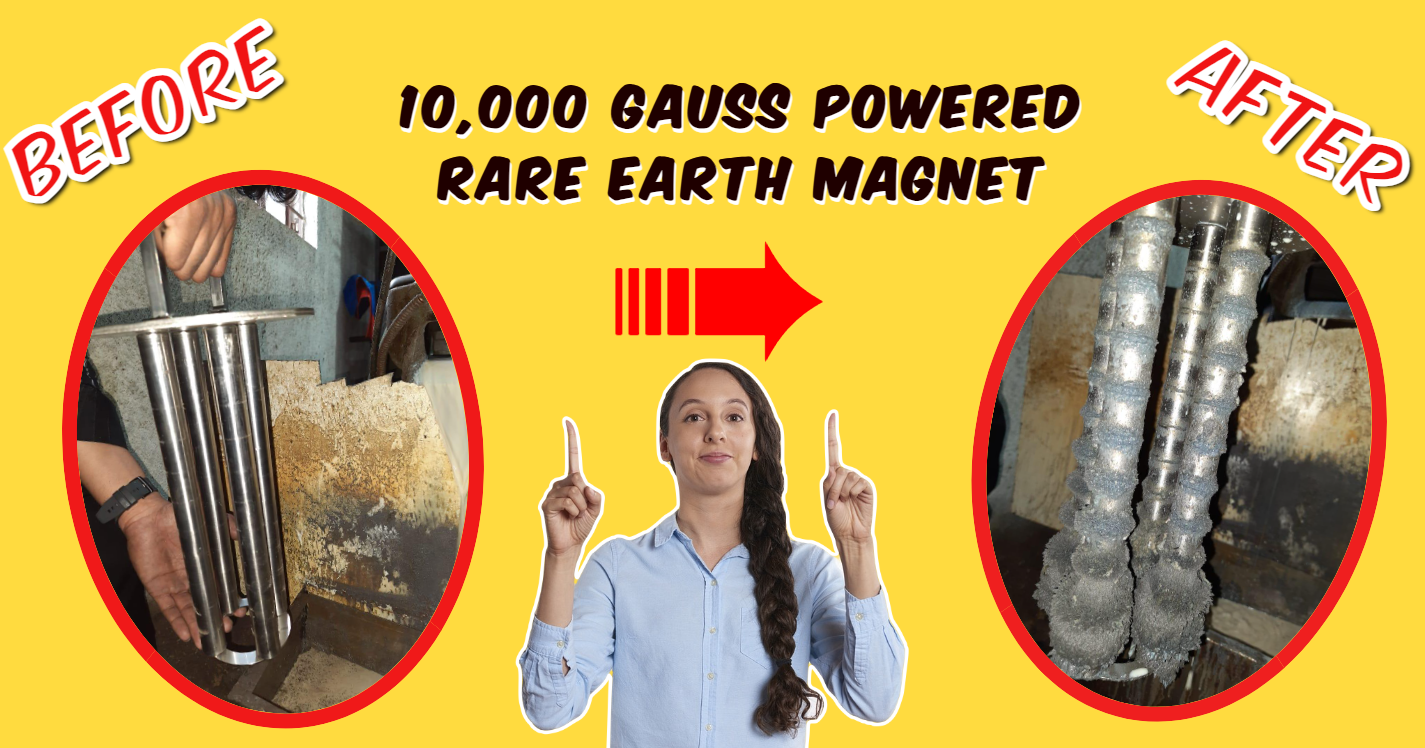
Contaminated fluid enters the housing and flows through the magnetic field surrounding the internal magnetic assembly. Ferrous particles are attracted to and retained on the magnetic surfaces. The cleaned fluid then leaves through the outlet while captured contamination remains inside for removal during scheduled cleaning.
🛡 Equipment Protection
Key Benefits
Reduces Ferrous Wear DebrisProtects Pumps and ValvesSupports Longer Component LifeReduces Unplanned DowntimeReusable Magnetic AssemblyLow Routine MaintenanceNo Disposable Filter ElementContinuous Inline Protection
⚙ Contamination Types
Particles Captured
Iron ParticlesSteel FinesFerrous Wear DebrisRust ParticlesMagnetiteGrinding DustMachining SwarfSmall Ferrous Chips
🏭 Industrial Use
Applications
Hydraulic Oil SystemsLubrication SystemsGearbox Oil CircuitsCutting-Oil SystemsGrinding CoolantMachining CoolantQuenching OilProcess-Fluid LinesSteel and Metal PlantsPower and Cement Plants
| Construction / Operation | Metal Trap Configuration |
|---|---|
| Installation | Inline fluid-line installation |
| Separation Method | Permanent magnetic separation |
| Target Contamination | Ferrous and magnetically responsive particles |
| Housing Construction | Stainless-steel vessel with support legs |
| Service Access | Bolted removable top cover |
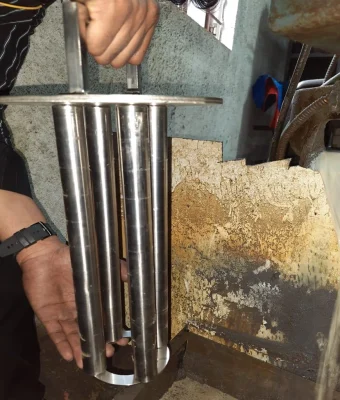
| Cleaning Method | Isolate, open, remove the magnetic assembly and wipe off collected contamination |
| Consumable Filter Media | Not required for magnetic separation |
| Connections and Capacity | Selected according to fluid, viscosity, flow rate and installation requirements |
🔧 Routine Service
Cleaning Procedure
- Stop the fluid flow and isolate the Metal Trap.
- Relieve internal pressure and allow the fluid to drain safely.
- Open the top cover and withdraw the magnetic assembly.
- Remove captured ferrous contamination with a clean cloth or suitable scraper.
- Inspect the seal and magnetic assembly, then refit and tighten the cover.
- Restore flow and check the housing and connections for leakage.
📐 Correct Sizing
Selection Information
Fluid TypeOperating ViscosityRequired Flow RateOperating PressureOperating TemperaturePipe Connection SizeContamination LoadAvailable Installation Space
Important: A magnetic trap targets ferrous contamination. Non-magnetic particles, water and oxidation products require an appropriate complementary filtration or oil-purification system.
FAQs
What is a magnetic filtration system?
A magnetic filtration system is an industrial ferrous contamination control system that captures iron, steel, rust, and other magnetic particles from oil and process fluids using a permanent magnetic field. It works without disposable filter elements, making it suitable for continuous inline protection of lubricating, hydraulic, and process-fluid circuits.
How does a magnetic filtration system work?
Contaminated fluid flows through the magnetic field surrounding the internal magnetic assembly. Ferrous particles are attracted and retained on the magnetic surfaces, while clean fluid continues through the outlet and back into the system.
Where are magnetic filtration systems commonly used?
These systems are widely used in hydraulic oil systems, lubrication systems, gearbox oil circuits, cutting-oil and grinding coolant systems, quenching oil, process-fluid lines, and in steel, metal, power, and cement plants.
Which types of fluid can be cleaned using a magnetic filtration system?
Magnetic filtration systems can be used with hydraulic oil, lubricating oil, gearbox oil, cutting oil, grinding coolant, machining coolant, quenching oil, and other process fluids carrying ferrous contamination.
What are the main advantages of using a magnetic filtration system?
Key advantages include zero consumable cost, a reusable magnetic assembly, reduced ferrous wear debris, protection for pumps and valves, longer component life, and low routine maintenance compared to conventional filtration systems.
Can a magnetic filter remove all types of contamination?
No. A magnetic trap targets ferrous and magnetically responsive contamination only. Non-magnetic particles, water, and oxidation products require an appropriate complementary filtration or oil-purification system.