

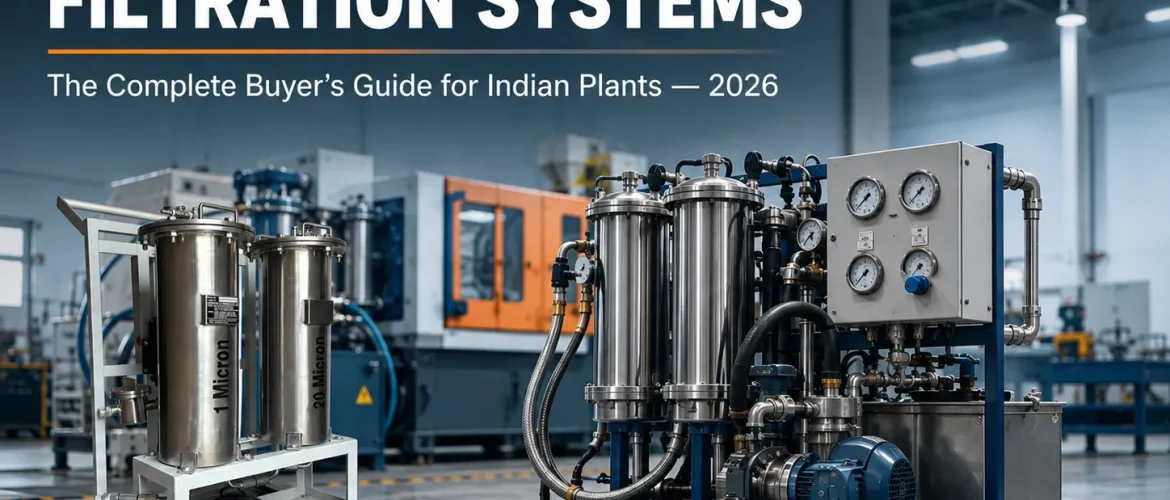
A hydraulic oil filtration system is the difference between a hydraulic circuit that runs for years without incident and one that eats through pumps, valves and seals every few months. If you’re researching this topic, you’re probably chasing one of two problems: unexplained hydraulic component failures, or a genuine push to hit a tighter oil cleanliness target before failures start. This guide covers exactly what a hydraulic oil filtration system does, how it differs from general-purpose filtration, what it costs in India in 2026, how to evaluate manufacturers in Pune and nationally, and how to choose the right one whether you need a small portable unit or a permanently installed system. By the end, you’ll know exactly what to ask a supplier before you buy, instead of taking a quoted spec sheet at face value.
What Is a Hydraulic Oil Filtration System?
A hydraulic oil filtration system is equipment designed to remove fine particulate and moisture contamination from hydraulic oil, protecting the tight-tolerance components pumps, valves, servo systems that hydraulic circuits depend on. Hydraulic systems run at high pressure through very fine clearances, sometimes just a few microns wide, which means even contamination invisible to the naked eye can score valve spools, wear pump surfaces, and cause erratic, unreliable operation. A hydraulic oil filtration system exists specifically to keep oil clean enough that those tight clearances stay protected.
How a Hydraulic Oil Filtration System Differs from General Oil Filtration
Not all oil filtration is built to the same standard, and this is where a lot of plants get it wrong. General-purpose filtration might catch visible debris and bulk contamination, but hydraulic circuits typically need cleanliness rated to specific ISO 4406 codes often far finer than what a basic strainer or single-stage filter can achieve. A proper hydraulic oil filtration system is engineered around that target cleanliness level, often combining multiple filtration stages to reach sub-micron particle removal that general filtration simply isn’t designed to hit. This distinction matters more than it might seem: a filtration setup that looks perfectly adequate on a lube oil tank can leave a hydraulic circuit dangerously under-protected, because the tolerances inside a servo valve or precision pump are simply unforgiving in a way most other industrial equipment isn’t.
Why Does Hydraulic Oil Get Contaminated?
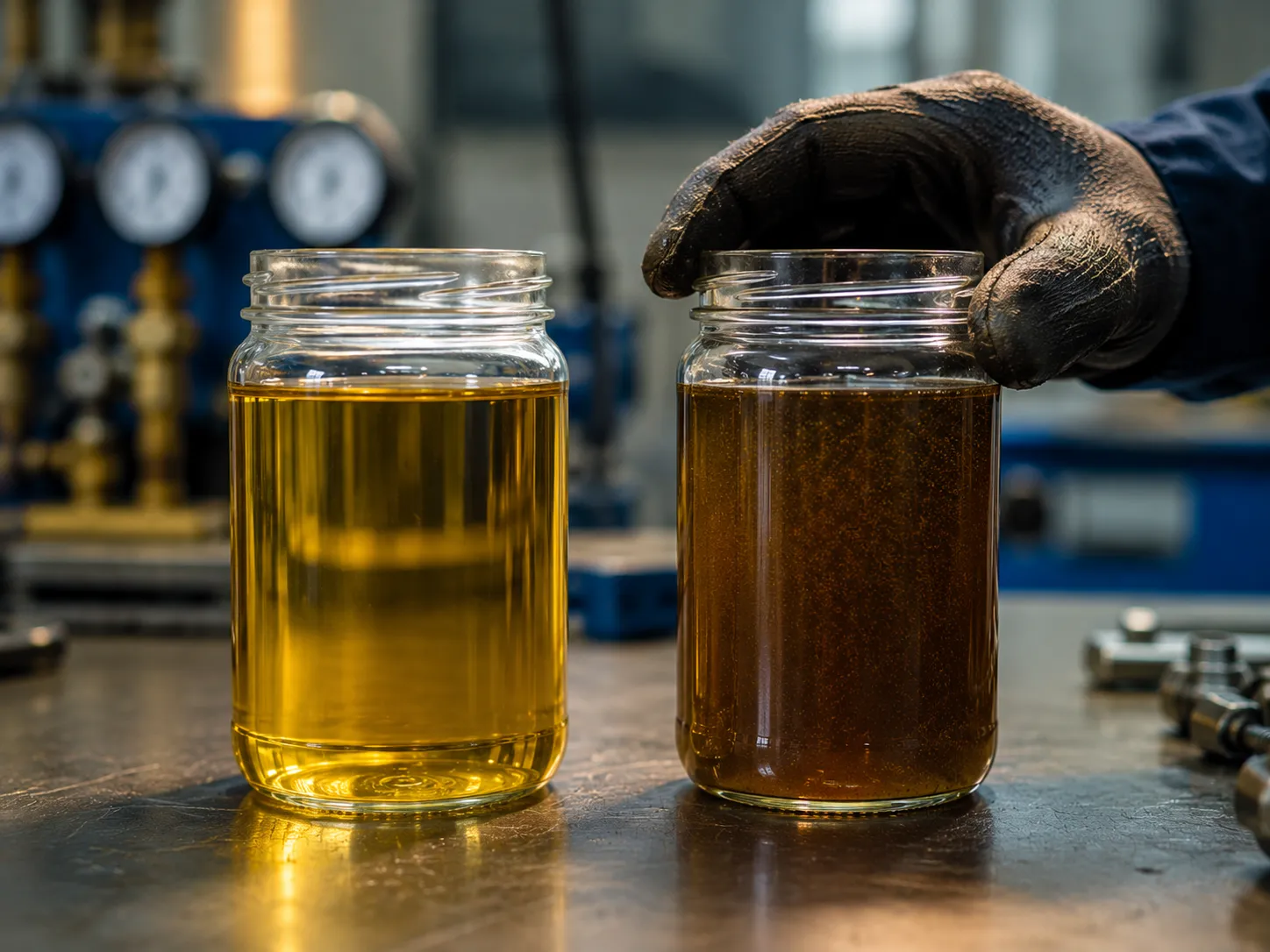 Hydraulic oil doesn’t stay clean on its own, and understanding where contamination actually comes from explains why a dedicated hydraulic oil filtration system matters more here than almost anywhere else in a plant.
- Ingression through seals and breathers: dust and moisture enter through cylinder rod seals, reservoir breathers and during fluid top-ups.
- Internal component wear: pumps, valves and cylinders generate metallic wear particles as they operate, which then recirculate and accelerate further wear.
- New oil isn’t clean oil: oil straight from the drum is often already dirtier than the cleanliness code your hydraulic components require.
- Water contamination: condensation, cooling system leaks, or humid environments introduce moisture that degrades oil and promotes corrosion.
- Cross-contamination during maintenance: contaminants introduced during hose changes, filter swaps or component repairs.
Signs Your Hydraulic System Needs a Filtration System
If any of the following sound familiar, it’s worth testing your oil’s cleanliness code and evaluating a dedicated hydraulic oil filtration system rather than continuing with reactive component replacement:
- Valves sticking or responding erratically under normal operating conditions
- Pump wear or failure happening faster than the manufacturer’s rated service life
- Erratic cylinder movement or pressure fluctuations without an obvious mechanical cause
- Oil that fails a cleanliness test against the ISO 4406 code your equipment requires
- Visible haziness suggesting water contamination in the reservoir
| Contamination Type | Source | Effect on Hydraulic Performance |
| Fine particulate | Ingression, component wear | Valve scoring, pump wear, erratic operation |
| Water | Seals, breathers, humidity | Corrosion, reduced lubricating film, cavitation risk |
| Metallic debris | Pump and cylinder wear | Accelerates further wear in a feedback loop |
| Air / foam | Poor reservoir design, low fluid level | Spongy operation, cavitation damage |
A quick note on testing: ISO 4406 cleanliness codes are usually expressed as three numbers (for example, 18/16/13), each representing the particle count at a different size range per millilitre of oil. Lower numbers mean cleaner oil. Most hydraulic equipment manufacturers publish a target code for their pumps and valves, and that target not a general “the oil looks fine” impression should be what your hydraulic oil filtration system is actually validated against.
How Does a Hydraulic Oil Filtration System Work?
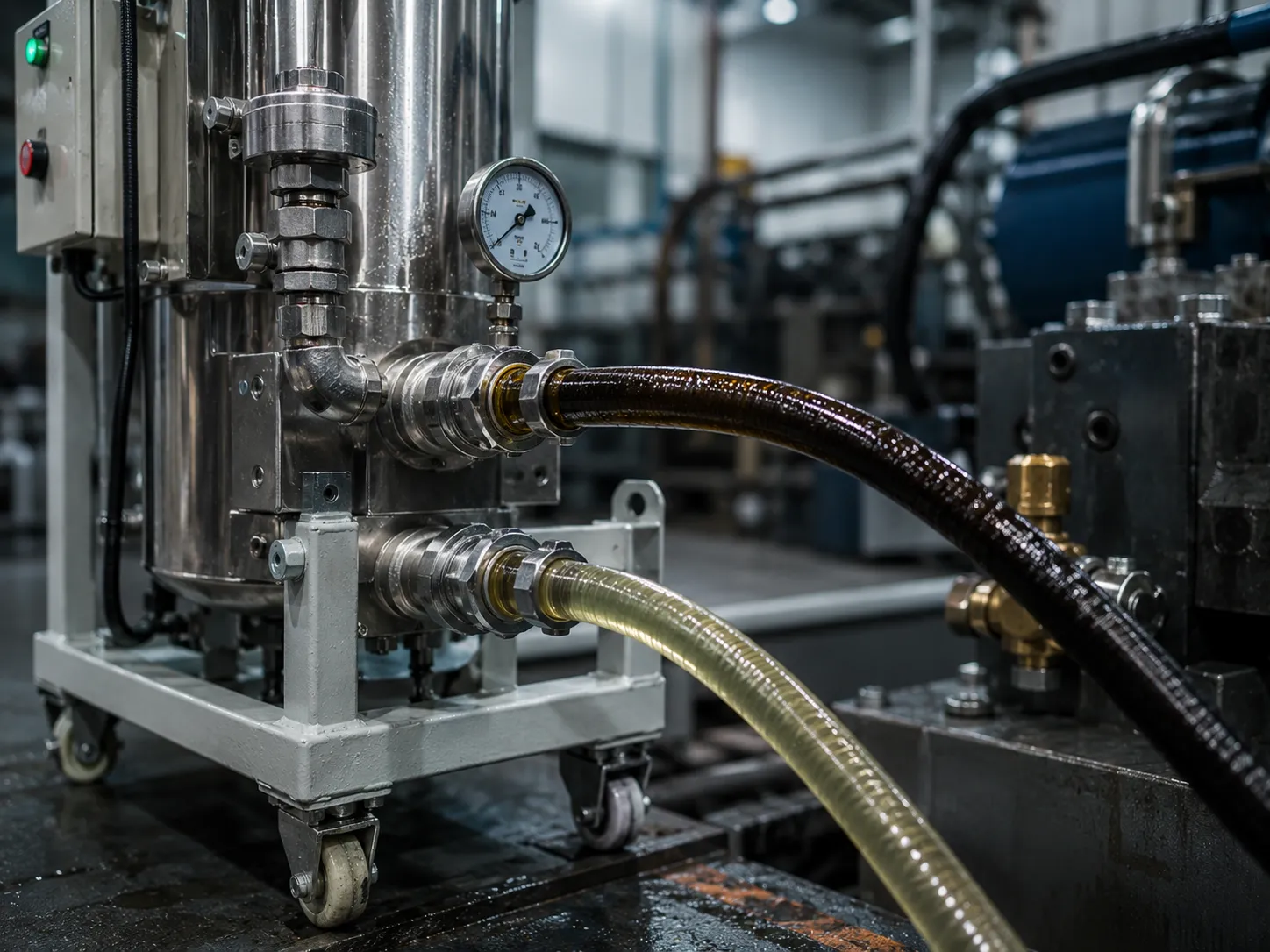 Most hydraulic oil filtration systems work by continuously drawing oil from the reservoir, passing it through one or more fine-filtration stages, and returning cleaner oil either offline in parallel with the circuit or inline as part of normal system operation. Offline systems are particularly popular because they filter independently of the main hydraulic circuit’s flow and pressure requirements, meaning filtration quality doesn’t depend on how the machine happens to be running at that moment.
Offline vs Inline vs Portable (Filter Cart) Hydraulic Oil Filtration Systems
Different configurations of hydraulic oil filtration systems suit different needs, and this is one area competitors rarely explain clearly:
| Configuration | How It Works | Best For | Consideration |
| Offline (kidney-loop) | Permanently plumbed, runs continuously and independently of main circuit | Fixed installations needing constant cleanliness control | Requires dedicated installation and plumbing |
| Inline | Filtration built into the main hydraulic circuit’s flow path | New systems designed around integrated filtration | Filtration only active when the circuit is running |
| Portable (filter cart) | Small hydraulic oil filtration system wheeled between machines or tanks | Multi-machine plants, reclamation jobs, small hydraulic oil filtration systems needs | Not a permanent solution for continuous high-contamination circuits |
If you searched for hydraulic oil filtration services near you, this is usually the configuration in play: many suppliers, including Karroter, offer portable filter-cart-style service visits for plants that need periodic cleanup rather than a permanent installation.
Benefits of Installing a Hydraulic Oil Filtration System
- Extended component life for pumps, valves and cylinders, reducing replacement frequency
- Fewer unplanned failures caused by particulate-driven wear
- Consistent cleanliness against ISO codes, rather than oil quality drifting between scheduled changes
- Lower total cost of ownership compared to reactive component replacement
- Reduced downtime, particularly with offline systems that filter without interrupting operation
- Longer oil life, cutting disposal frequency and replacement fluid cost
Applications & Industries That Rely on Hydraulic Oil Filtration Systems
A hydraulic oil filtration system is essential wherever precision hydraulic equipment operates under continuous load, including:
- Injection molding and plastics processing
- Metal stamping and press operations
- Construction and earthmoving equipment fleets
- Power plants and turbine auxiliary systems
- Steel and cement plant hydraulic machinery
- Aerospace, defence and other high-precision hydraulic applications
Hydraulic Oil Filtration Machine Price in India – What Affects the Cost?
This is one of the most searched questions in this category, and the answer depends heavily on configuration and flow rate. Based on current Indian market listings, portable filter carts and entry-level hydraulic oil filtration systems typically start around ₹1–1.7 lakh, mid-capacity systems with higher flow rates and multiple filtration stages generally run ₹2–4 lakh, and larger, automated offline systems with HMI controls can cost more depending on flow rate and cleanliness targets.
| Factor | Impact on Price |
| Flow rate | Higher throughput requires larger pumps and filter housings |
| Target cleanliness code (ISO 4406) | Finer cleanliness targets need multi-stage filtration, raising cost |
| Portable vs fixed installation | Portable filter carts are typically more cost-effective for multi-machine plants |
| Automation level | HMI controls and particle counters add to the base price |
| After-sales support | Local installation, commissioning and service coverage affect total cost of ownership |
Hydraulic Oil Filtration Systems Manufacturers in India
India has a wide base of hydraulic oil filtration systems manufacturers, from broad multi-oil-type suppliers to specialists focused specifically on hydraulic cleanliness targets. Evaluate manufacturers against a practical checklist rather than price alone:
- Proven ability to hit specific ISO 4406 cleanliness codes, not just generic “filtration” claims
- Configuration flexibility offline, inline and portable options depending on your plant’s needs
- Local installation and commissioning support, especially valuable outside major industrial hubs
- Track record with your specific equipment type press hydraulics, mobile equipment, and precision molding hydraulics all have different demands
- After-sales service response time ask directly how quickly a technician can reach your plant
Hydraulic Oil Filtration Systems in Pune
Pune is one of India’s strongest industrial hubs for hydraulic and oil filtration equipment, with dense automotive, forging, and manufacturing clusters generating steady demand for hydraulic oil filtration systems. If your plant is based in or near Pune, working with a locally based manufacturer offers real advantages faster installation, easier access to spares, and quicker service response if a unit needs attention. Karroter Technique is based in Narhe, Pune, and designs, manufactures and commissions hydraulic oil filtration systems for plants across India.
Karroter’s Hydraulic Oil Filtration System – Built for Your Circuit
Karroter’s Mechanical/Hydraulic Filtration System is engineered specifically for high-pressure hydraulic circuits requiring fine particulate control, removing contamination down to sub-micron levels while running offline alongside your equipment without interrupting production. It’s built on the same reliable separation principles as our Centrifugal Oil Cleaner line, so plants already running Karroter equipment elsewhere get a consistent maintenance approach across their whole filtration setup. Whether you need a permanently installed hydraulic oil filtration system or a portable unit for periodic service visits across multiple machines, our team sizes the configuration to your actual flow rate and target cleanliness code not a generic standard model.
How to Choose the Best Hydraulic Oil Filtration System for Your Plant
- Know your target ISO 4406 cleanliness code. Your hydraulic equipment manufacturer’s spec sheet should state this don’t guess.
- Decide between offline, inline or portable configurations. Fixed high-value circuits usually justify a permanent offline system; multi-machine plants often do better with a small hydraulic oil filtration system on wheels.
- Confirm your actual flow rate and reservoir volume. Undersizing limits throughput; oversizing wastes capital.
- Check moisture removal capability, not just particulate filtration, if your plant has humidity or water-ingress issues.
- Consider automation. Particle counters and HMI controls add cost but reduce manual monitoring.
- Evaluate after-sales support and local service availability a hydraulic oil filtration system is a long-term investment, and downtime waiting for a technician defeats the purpose.
Maintenance & Best Practices for Hydraulic Oil Filtration Systems
- Test oil cleanliness regularly against your target ISO 4406 code rather than assuming filtration is working.
- Replace or clean filter elements on schedule, not just when flow visibly drops.
- Inspect seals and breathers during routine maintenance, since these are common ingression points.
- Log cleanliness results by machine, so any drift is caught before it causes component wear.
- Match filtration run time to contamination load heavily used circuits need longer or more frequent filtration cycles.
- Review your hydraulic oil filtration system’s sizing periodically, especially if you’ve added machines or changed duty cycles since the original installation.
Hydraulic Oil Filtration System vs Reactive Component Replacement – Which Costs Less?
| Factor | Reactive Component Replacement | Hydraulic Oil Filtration System |
| Recurring cost | Pump, valve and seal replacement as failures occur | One-time investment, minimal running cost |
| Downtime | Unplanned stoppages during failures | Minimal offline systems filter continuously |
| Predictability | Failures happen without warning | Cleanliness stays within a known, tested range |
| Component life | Shortened by ongoing contamination exposure | Extended by consistently clean oil |
| Long-term cost | Higher due to repeated part replacement and downtime | Lower after the initial payback period |
Waiting for hydraulic components to fail before addressing oil cleanliness is one of the most expensive habits a plant can have a properly specified hydraulic oil filtration system removes that risk at the source rather than repeatedly paying for its consequences.
Frequently Asked Questions
What is a hydraulic oil filtration system used for?
A hydraulic oil filtration system is used to remove fine particulate and moisture contamination from hydraulic oil, protecting pumps, valves and cylinders from the wear and erratic operation that contamination causes in tight-tolerance hydraulic circuits.
How much does a hydraulic oil filtration machine cost in India?
Prices vary by configuration and flow rate portable filter carts and entry-level systems typically start around ₹1–1.7 lakh, mid-capacity systems with multiple filtration stages generally run ₹2–4 lakh, and larger automated offline systems cost more depending on flow rate and cleanliness targets.
Do you offer hydraulic oil filtration services near me?
Karroter provides both permanently installed hydraulic oil filtration systems and portable filter-cart-style service visits for plants across India, with local installation and support out of our Pune facility get in touch with your location and requirement for a direct answer.
What’s the difference between offline and inline hydraulic oil filtration systems?
Offline (kidney-loop) systems run continuously and independently of the main hydraulic circuit, filtering regardless of whether the machine is operating, while inline systems are built into the circuit’s flow path and only filter while the system runs.
Are small hydraulic oil filtration systems as effective as large fixed installations?
For the right application, yes small, portable hydraulic oil filtration systems (filter carts) are highly effective for multi-machine plants, reclamation jobs, and periodic cleanup, though they’re not typically meant to replace a permanent offline system on continuously operating, high-contamination circuits.
How do I choose the best hydraulic oil filtration system manufacturer in India?
Look for proven ability to hit specific ISO 4406 cleanliness codes, configuration flexibility (offline, inline, portable), local installation and service support, and a track record with your specific type of hydraulic equipment.
Can a hydraulic oil filtration system also be used for gear oil?
Yes, many hydraulic oil filtration systems, including centrifugal and multi-stage designs, are equally effective on gear oil and other mineral-based industrial oils, since the underlying contamination removal principles are similar.
The Bottom Line
Hydraulic component failures rarely start with the pump or the valve they usually start with contaminated oil that was never given a proper hydraulic oil filtration system to protect against. Whether your plant needs a permanent offline installation hitting a specific ISO 4406 code or a small, portable system to service multiple machines, the right hydraulic oil filtration system pays for itself through fewer failures, longer component life, and far less unplanned downtime than reactive repairs ever will.
Not Sure Which Hydraulic Oil Filtration System Fits Your Circuit?
Tell us your flow rate, target cleanliness code and whether you need a fixed or portable solution, and get in touch with Karroter we’ll recommend the right system for your plant.
For further technical background on how hydraulic oil cleanliness is measured, see this independent explainer on ISO 4406 vs NAS 1638 cleanliness standards.
Related reading from Karroter: